
Phish Genome Project

SATURDAY 11/16/1991
.
Wombat vs DWYS
Wombat
DWYS
Cuddly, but Muscular
Trey Anastasio has been involved in no less then 10 different side projects. Including Jazz Mandolin Project, 1993; Bad Hat, 1994; Surrender to the Air, 1996; 8 Foot Fluorescent Tubes, 1998; Phil Lesh and Friends, April 99; Vermont Youth Orchestra, 2001; Oysterhead, Fall 2001; Dave Matthews and Friends, winter ’03-’04; Trey Anastasio solo acoustic; Trey Anastasio Band, and Ghosts Of The Forest.
Trey played on Ernie Stires’ 1997 LP, Samson Riffs. As Ruth Horowitz reported in Seven Days back in Sept 97 “Half way through “Geulah Papyrus,” a straight-ahead Phish song about a spider and a fly, the music breaks into a short theme and variation in which counterpoint melodies weave in and out like silk strands in a web. The piece, “The Asse Festival”, was written by lead guitarist Trey Anastasio and dedicated to his friend and mentor, Cornwall composer Ernie Stires”
Jon Fishman is the man with 100 names. Here are a few notable ones. Fish, Henrietta, Tubbs, Jon the Fishman, Moses Brown, Moses Heaps, and Moses Dewitt, Moses Yastrzemski, J. Edgar Hoover, Vinnie Barbarino, Phil Collins, Zero man, Johnny B. Fishman, Hankrietta, Tommy Dorsey, The Piper, Sans Bag the Piper, Tubbs the Beast Boy, Eye Ball Man, Little Jon and Friar Tubbs, Jon, Friar Tubbs, Henrietta Fieldberg, Henrietta Tubman, Chuck Norris, Greasy Fizeek, Ron Jaworski, Marco Esquandolas, Luke Skywalker, Sneezeblood Eyeball, Forrest Gump, and Morton Charlton Heston. Of course this just scratches the surface.
Bassist Mike Gordon is also a filmmaker, directing the “Down with Disease” video and Tracking that showed the creative process behind Hoist.
Page McConnel’s Dad, Dr Jack helped develop Tylenol when he worked for McNeil.
Jerry Garcia’s solo project, Dave Mathews Band and Phish shared a manager – founder of Red Light Management Coran Capshaw.

They sat at the bar, as old and etched
with a thousand stories, of the Hotel
Fandangos Millionaires Room (where all the stars come
to shine in Weezenhawk) last Tuesday,
Frederick had brought the I-Ching
and in a late night toss
they saw it was time to head back
to the pyramids. They paid their tab
then hopped in a cab to JFK:
Henry asks “What goes on in the temples
at night?”, ”Ancient Egyptian burials,
prehaps a sacrifice or two”
replied Frederick, “You see
Hathor was the cow goddess
and she gave birth to Osiris the King
who was deemed as having the most desirable phallus
in the palace. It was”, “diamond blue”
Gerorge interupted “a high erect prick
for Isis’s thighs, like a monster
bass swimming up the Nile in a hot eclipse evening
with clear eyes. That’s the key.”
“To what” asks Henry, Frederick says “Everything.”
Henry understood much less now
then when they were at the bar and as they entered
the airport he began to cry, wailing
something like “There’s not yet a word created
to do you guys justice and lets go home.”
They calmed him down and he continued
“There’s going to be a double suicide,
George is going to die
In a plane crash and I’m going to do the same
so I can be with him,
don’t look at me that way,
this is a tragedy.” George said “You’re crazy man,
we’ve got a plane to catch in twenty minutes”
and went off to the bathroom.Henry continued
to cry and Frederick was silent for a second, thinking
the whole thing as relivant as the fact that water spins
clockwise south of the equator, something
so arbirary being so consistent,
he took a last pull off his cigarette
and turned to Henry “Things ain’t what they used to be,
moving in a kind of off-hand dexterity
toward the millenium. We were in DC the first time
you started with this shit and it still makes me think
of the same two things;
the sculpture you made out of ashtrays
in Ferdonia that blocked Miss Whittlemeyers window
and got the priest and rabbi after us.” He was silent again,
getting lost in the image. “What’s the other thing
Fred”?”, “That somewhere, Henry, a Sphinx is laughing.”
Apples provide a delicate sweetness to this velvety soup that develops much of its deep flavor from roasting the squash.
3 Medium Acorn Squash
1 Medium Onion
3 Sweet Apples (Macintosh is a good choice)
5 C Stock
1/2 C Apple Juice or Cider
1/4 C Brown Sugar
1 tsp Cinnamon
1 tsp Curry
1 tsp Nutmeg
1 TB Salt
1 Stick of Butter
Salt and Pepper to Taste
Halve the squash and clean.
Mix together Salt, Curry, Cinnamon, Nutmeg and Brown Sugar
Place 1/8 C Butter 1/6 of sugar/spice Mix in each half
Bake at 375 for about an hour or until the squash is tender.
While Squash is baking cook onion and apple in a little olive oil with the remaining butter until soft.
Once Squash is cooked scrape flesh out and puree in a food processor with the above apple/onion mixture
Place puree in a soup pot and add stock and apple juice, bring to a simmer, reduce and adjust seasoning.

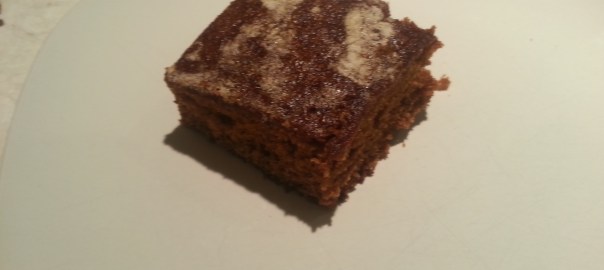
Cerise’s Hot Water Gingerbread
A found recipe, it was laying on the ground outside of the library. Cerise took it and made it her own and WOW is it good.
Ingredients:
2 C Flour
1/2 C Sugar
2 tsp each Baking Soda, Ginger and Cinnamon
1/2 tsp each cloves and salt
1/2 C Shortening
1 C Dark Molasses
2 Eggs
1 C Hot Water
Directions:
Preheat oven to 350°
Combine dry ingredients
Add last 4 ingredients
Mix Well with a Mixer
Pour into 9 X 13 Pan and Bake

We made a quick Royal Icing and drizzled it over the top and served with milk. YUM
In 1993 Fats Domino released his only Christmas album, Christmas Is A Special Day, and it included two original compositions. One was a secular song, “I Told Santa Claus,” the other a religious themed one, “Christmas Is A Special Day.”
It is one of my favorite songs that remind us of the why of the season because it is upbeat and The Fatman’s warm vocal embodies the spirtit of the season.
Thanks for reading along each day and may you all find the peace Jesus offered today and everyday.
Kay Starr brought a little hipness to Christmas in 1950 when she released this Irving Taylor, Dudley Brooks, and Hal Stanley penned homage to Santa. Released by Capitol as a single, it is one of Starr’s most famous songs and has been covered most famously by Vonda Shepard on the Ally McBeal: A Very Ally Christmas album.
I like this one a lot better than other Christmas Eve songs like “Here Comes Santa Claus” or “Santa Baby”. Now that it’s time to settle in and wait for Christmas morning, pour yourself a cocktail, sit back and relax to this swinging cut by The Queen of The Jukeboxes.
One of the oldest Christmas songs, “The Twelve Days of Christmas,” recounts a series of elaborate gifts bestowed upon someone during the course of the 12 days from Christmas (Dec 25th) to The feast of Epiphany (January 6th). The first known appearance of the lyric was a published version from 1780 in England. The version that is sung today comes from a 1909 arrangement by English composer Frederic Austin. This is where the elongated “five gold rings” first appeared.
The reason I included this song is because of the fantastic (and fun) job Straight No Chaser have done with it. They add several other Christmas songs and stray far from the rigid cumulative manner of the published song. This video helped the a cappella group formed in 1996 at Indiana University gain popularity and eventually led to them to a five-record deal with Atlantic Records in 2008.
 Inertia Satori