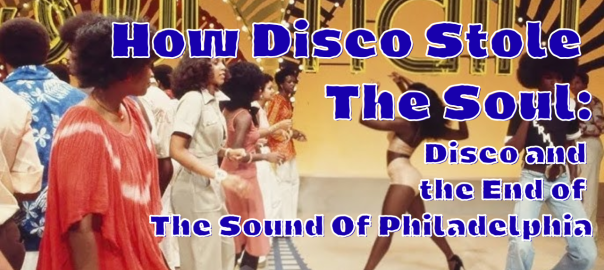
There was a time when The Sound of Philadelphia ruled the airwaves with elegance; a lush soul symphony where they wore their hearts on their sleeves and in the span of one four-minute song you could go from heartbreak to hope.
They called it TSOP, the brainchild of Kenneth Gamble and Leon Huff. It was a hit factory that rivaled Detroit and Memphis. A hit factory that was a cathedral built on the tightest rhythm sections and elegant string charts. It preached the gospel of love. Love Train was a sermon. If You Don’t Know Me By Now was dressing up in your Sunday finest for emotional devastation. Their de facto theme song TSOP (The Sound of Philadelphia) offered salvation and was the blueprint for sleek instrumental glide. Philly soul was a complete package, it had something to say.
Everything was good, and Philadelphia International Records was racking up the hits, but things were quickly changing. DJs in nightclubs wanted longer grooves and started looping certain songs to keep the dance floor packed. These songs were all the same, beat forward, the kind that became the backbone for disco.
The door had been cracked opened and disco crashed the house party: the furniture got rearranged, the lights were turned up, and the band was replaced with an endless, uninterrupted beat.
Disco first showed up like the guy someone knew. Everyone said he was cool. Turns out he was the guy who was yelling “The party is just starting” at three in the morning when everyone else had gone home. All of a sudden Do It Any Way You Wanna was being looped by a DJ and the song was now serving the groove instead of vice versa.
The church had been infiltrated and corrupted by disco. There was no going back.
There is one rule in disco, keep the bodies moving. Emotional depth had no place in a cocaine fueled delirium. The message became optional and any depth was cool if you fit in with the pulse, the four-on-the-floor that flies forward with no detours allowed.
Disco had conquered the dance floor, the music had flattened, slowly at first with the stories fading into slogans. Then the transformation quickened as white people discovered disco through movies like Saturday Night Fever and groups like The Bee Gees. The people in charge over at the record companies had their blinders removed and disco became big business. The Bee Gees became the face of the genre, making disco a generic universal vibe that had grandma dancing in the kitchen with the pre-teen kids. Every song on the radio had a mirror ball makeover in the late seventies.
The vocals too, they ended up riding the groove from the backseat, barely looking at the road. In Philly you had voices like Teddy Pendergrass who could break you down in real time, the notes pouring out like a confession from the depth of your soul. With Disco it was an endless chorus that was there to echo the beat.
The record companies loved it. They always love a formula. It was efficient, predictable, a groove that never changed. It is the kind of thing you could build a bank on. The songs got longer, slicker, and interchangeable. There was no band anymore, just a DJ, and they needed continuity and an endless stream of hits.
No more messy, human emotion driving songs. That was the domain of TSOP and Philadelphia International Records. Disco didn’t breathe or hesitate or get into a slow burn, those hallmarks were now a liability to profitability.
As with anything that is co-opted by mainstream culture and can be exploited by the suits running the record labels and radio stations, disco crashed. It burned bright, but burned fast. Remember Disco Demolition Nights? That was backlash coming quick and cancelling a whole glittery jacked-up culture.
Part of the wreckage was The Sound Of Philadelphia and the idea music could be a hit and be sophisticated and deeply felt all at once. The orchestra had packed up and left by the back door. TSOP wasn’t coming back either.
Disco has been rehabilitated through the warm lens of nostalgia, forgetting that in its short life it killed the Sound Of Philadelphia. A death that was far from merciful; more like 4 shots in the stomach and being left on the side of the road. It was seductive at first, then slowly the rhythm was turned into a beat that was so loud you couldn’t hear the heart underneath.
Disco celebrated specticle. TSOP testified; about love, about struggle, about community. Then it got steamrolled into a smooth, shiny, easy to sell piece of gold.
 Inertia Satori