Phish in the studio
Often mailigned by fans and critics alike, Phish is the studio has provided some brilliant moments
For many, Phish is a live experience. When you want to introduce someone to the band, you don’t hand them Joy, you take them to a show. But this betrays the fact that, from the very beginning, they’ve managed to craft some truly outstanding studio recordings.
This list isn’t about what works best on stage. It’s about how the band used the studio as an instrument, how the music, the textures, and the interplay come alive in that space.
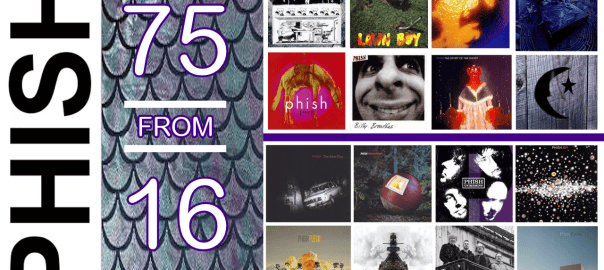
With 16 albums under their belt, it’s the perfect time to look back and rank the top 75 songs Phish ever laid down in a studio.
Methodology
I first pulled 137 songs off their 16 Studio LPs as follows:
Junta – 7
Lawn Boy – 8
Picture of Nectar – 11
Rift – 14
Hoist – 9
Billy Breathes – 13
Story of the Ghost – 12
Sikket – 4
Farmhouse – 12
Round Room – 7
Undermine – 6
Joy – 9
Fuego – 5
Big Boat – 8
Sigma – 8
EVOLVE – 6
Party Time was not included
The question here is easy:
If you heard this song on the radio without knowing who Phish was, would you
A) Change the channel
B) Listen to the song
C) Find the song after to listen again
All these songs would be in the C category.
My concern here is how well did they use the medium of the studio, not wanting to see a song live. It is how the music and instrumentation work together in that space, so you may find songs that don’t work as well live as constructed in the studio on this list.
One last Caveat to the reader, this is a list written through the eyes of one fan and is colored by when each LP was released in relation to my life.
75) Sing Monica – Fuego
One of the few songs on 2016’s Fuego that seems fully realized both musically and lyrically. Tom Marshall has written an incredibly punny lyric.
74) Farmhouse – Farmhouse
Built around a laid-back groove and simple, reflective lyrics, “Farmhouse” explores themes of isolation, communication, and gratitude. It is Nashville in its lyrical storytelling, while the rhythm guitar, syncopation, and overall pocket owe a nod to Bob Marley. It’s a genre-blending track, like much of Phish’s catalog.
74) Friday – Round Room
A tender standout from Round Room, Friday showcases Phish’s softer side, with heartfelt lyrics and a graceful, understated arrangement; Mike and Trey’s vocal interplay adds warmth and texture, giving the song a quiet emotional resonance that deepens with each listen.
73) The Name Is Slick – Siket Disc
One of two Siket Disc entries on our list, this might be the most satisfying cut from the experimental collection of Ghost session outtakes. What begins as a formless afterthought gradually locks into a loose, slow groove—driven by Gordon’s melodic lead and colored by McConnell’s ambient textures—offering a rare glimpse into Phish’s raw creative process.
72) Guelah Papyrus – Picture Of Nectar
A great glimpse into Phish as they began to move from the extended compositions of Junta and Lawn Boy to the more compact studio songs of Rift and beyond. An off-kilter drum beat anchors the intricate playing of Mike and Page while Anastasio imagines being a fly. The lyric is still cryptic, and the song is listed as being in 3 parts. definitely a turning point for the band.
71) Frankie Says – Story Of The Ghost
One of Story Of The Ghost’s greatest strengths is that Phish doesn’t extend every song beyond a basic verse-chorus-solo structure. They let them stand on their own. They embrace the studio with acoustic guitars and overdubs. And here, adding to the song’s depth, the slow tempo allows the vocals to almost float just above the music, helping Frankie make the list.
70) Time Turns Elastic – Joy
Steve Lillywhite returns to produce 2009’s Joy and captures the album’s centerpiece brilliantly. Like Emerson, Lake, and Palmer or early King Crimson this multi-part suite benefits from the studio, highlighting McConnell’s piano runs and the interweaving vocals.
69) Valdese – Evolve
Valdese brings a playful rockabilly flair to Evolve, standing out with its upbeat rhythm and tight arrangement. Clocking in under four minutes, it’s a compact, hooky track that shows Phish can still surprise with style shifts while keeping things crisp and fun.
68) Chalk Dust Torture – Picture Of Nectar
Often panned for the vocal effect Kevin Hamlin used, Chalkdust still makes our list for the concise punch it packs and stellar production. As for the vocal effect, it gets points here as the studio is a place to experiment. This is the song of a band that is barreling headlong into rock god status.
67) The Squirming Coil – Lawn Boy
This may have ranked higher had its placement on the album been different, but as an opening track, it falls flat. Also, this is not Trey’s strongest vocal performance with some weird effect, not helping matters. What it does have is Page shining, laying down a brilliant solo in the outro portion of the song.
66) Fee – Junta
Like Phish themselves Junta is a paradox and Fee exemplifies this. Fishman’s kick drum opens an album that is unpolished, yet refined, revealing a Caribbean beat propelling the story of a weasel. This is clearly a band that has put in some time honing their craft and are willing to use the studio as another instrument. The sound effects, the added percussion, and Trey singing the vocal through a pair of headphones taped to another microphone are why Fee makes the list.
65) Fuego – Fuego
Fuego makes the list for its sheer gall. The song seems to be a series of disjointed pieces that are intent on getting back to the extended compositions on Junta and Lawn Boy. Surprisingly it works, partly because it is a whole band composition and partly due to Bob Ezrin’s production.
64) Stealing Time from the Faulty Plan – Joy
Another meditation invoking the feeling of Anastasio’s excesses pitted against the redemption he found. The warm production accentuates the backbeat and its lockstep strut with Anastasio funky guitar lick.
63) Prince Caspian – Billy Breathes
With a bubbling intro gently easing us from Steep into the song, this is a great example of Phish exploring alternate arrangements in the studio. Using C S Lewis’s character from The Chronicles of Narnia the band creates a swirling soundscape that mirrors the rough water the singer imagines Prince Caspian on.
62) Undermind – Undermind
The title track to 2004s Undermind finds the band laying down a slick groove. Always pushing boundaries both musically and lyrically we find a song here that works by suggestion. The production highlights Anastasio’s airy guitar vs Page’s heavy organ as the rhythm section softly works the pocket.
61) Character Zero – Billy Breathes
Phish started writing big rock and roll songs on Billy Breathes, perhaps an influence of covering Quadrophenia. Here we find the band attempting to tighten the song, eliminating the extraneous and getting down to the nitty-gritty. Also, it’s placement as the second song gets points, kicking the energy from Free up another notch.
60) Seven Below – Round Room
Bryce Goggin ended up producing a band that was already imploding in the earliest stages of 2.0 but still coaxed the best from them. Seven Below is driven by Fishman’s loose 16th snare and ride over a syncopated bass drum. It lays the foundation for a cinematic soundscape, haunting as it plows forward to a monumental conclusion. This is Phish distilling the past few years to its dramatic essence.
59) Kill Devil Falls – Joy
Joy is an album celebrating rebirth. Kill Devil Falls offer a cautionary tale about the ease with which you can slip back into bad habits. The short rocker with Anastasio’s driving guitar is perfectly placed on the album, offering the listener a little breather between the bigger pieces.
58) Waste – Billy Breathes
One of Phish’s earlier ballads, the recording here is flawless. Anastasio’s rolling guitar lurks just below the surface while McConnell’s piano line could have been from Pink Floyd in 1969. This is a band embracing the studio to create an almost perfect album.
57) Birds of a Feather – Story Of The Ghost
Here we find Phish just giving us a taste of what Birds Of A Feather would become live. This is a good thing as it helps them to avoid the pitfalls of playing extended solos that distract from the song as a studio creation. With its lyrics giving a nod to the community the band has built, a rapid-fire drum beat, edgy guitar, and production reminiscent of Talking Heads Remain In Light, this is everything you want from studio Phish.
56) Bathtub Gin – Lawn Boy
Page McConnell takes this Susannah Goodman penned song and ads a wild free form intro. Perhaps the best sounding song on Lawn Boy, they seemed to nail the mix here and Trey’s voice complements instead of hindering the lyric like other songs on this album. The sound effects used here also complement and enhance the song, becoming a 5th instrument in the extended instrumental section.
55) Down with Disease – Hoist
The second track on Hoist is a bonafide Phish classic live and you could say the same about the studio version. By keeping it at 4 minutes we are given the bones of a song that can also stand on its own as a MTV video. The catchy rhythm gets started with Gordon’s memorable bass line before taking several left turns musically. The production is crisp and the addition of background singers puts this one over the top.
54) Dirt – Farmhouse
One of Phish’s darkest songs lyrically, where the singer seems to be contemplating suicide, is the most affecting thing they ever recorded. By adding strings courtesy of David Gusakov / violin, Laura Markowitz / violin, John Dunlop / cello, and Roy Feldman / viola, the song is given a strange majesty as if we are being lifted above the pain. Bryce Goggin captures the warmth of Anastasio’s string arrangement and allows the song to breathe.
53) Sample in a Jar – Hoist
Another radio-ready song off Hoist, Paul Fox did an amazing job smoothing out some of Phish’s inconsistencies in the studio and this is a great example. This is mostly due to the vocals, and how in sync they are, that lead to a climax with the whole band singing. It sounds a little dated today but is still a strong effort and worthy of repeated listenings.
52) Blaze On – Big Boat
Blaze On represents a shift in the band and Anastasio/Marshall’s songwriting. It is a quintessential blues-rock groove and is one of the few tracks on the album that comes alive in the studio. Much of Big Boat sounds sterile and phoned in by the band, largely due to Bob Ezrin’s production. Here is a band enjoying making music simply for the pleasure of it.
51) Contact – Junta
Fourteen songs written by Mike have appeared on studio albums but this is him at his absurdist best. With its quirky lyrics and simple rhythm, this is one of the standouts on Phish’s debut album.
50) Gotta Jibboo – Farmhouse
Phish have occasionally tried adding horns in the studio with excellent results. Farmhouse has several tracks employing this extra layer and Gotta Jiboo is taken to another level because of it. One of several Trey Anastasio Band songs that migrated to Phish for their Farmhouse album, it’s a great snapshot of the band trying to free itself from the Prog like compositions on their first 6 albums.
49) Split Open and Melt – Lawn Boy
Speaking of horns, Phish’s most famous foray into augmenting the band with horns came on the Summer 1991 tour with The Giant Country Horns. Here we find their lone studio appearance with Phish. This is one of Phish’s more challenging compositions and the almost free-jazz section after the vocals is the highlight with Mike shining. It would have been ranked higher, but, as with a lot of Lawn Boy, they felt the need to use a vocal effect that distracts more than enhances the lyric.
48) Theme from the Bottom – Billy Breathes
The longest track on Billy Breathes verges on being a bluesy ballad with the plantive piano and strong harmonies. That is until the instrumental break, here a case for letting Phish stretch it out a bit in the studio. The months of playing the song live served the studio version well and it may be one of their best group vocal performances.
47) Oblivion – Evolve
Oblivion rides a filthy groove that anchors the entire track, making the improvisation feel like a natural extension of an already-strong song rather than just the highlight. While the whole band shines, Page McConnell’s synth work breathes extra life into the track, and the polished mix delivers a version far crisper than any live recording. On Evolve, the critique of Phish studio albums improvisational magic getting lost in translation is refreshingly absent.
46) Magilla – Picture Of Nectar
If you didn’t know this was Phish, you could easily hear it as an unknown jazz standard. The years of playing songs like Take The A Train and Donna Lee really paid off in this Page McConnell composition. This may be the most swinging thing they ever laid down in the studio with the interplay between Mike and Page driving the song.
45) Lifeboy – Hoist
The lullaby feel to this Hoist standout is a great example of how bluegrass changed Phish’s vision while still keeping the quirky lyricism that defines Phish. Bela Fleck joins the band making this one of the most beautiful melodies Phish ever recorded. Another example of the studio as a chance to expand their pallet with guests and acoustic instrumentation.
44) It’s Ice – Rift
A heavy and unnerving listen, Page seals another vocal victory. He sings a little deeper and perfectly highlights the desperation found in the lyric. One of the most complex songs Phish had written at this point and they execute flawlessly. Songs like this are why Rift has the most entries on this list.
43) Miss You – Big Boat
Written for his sister who passed, Anastasio conveys weariness, sadness, and even anger in this Big Boat ballad. Bob Ezrin did a great job capturing the spirit of the song, making it warm, but detached, with a plaintive solo from Trey punctuating the song. This could be an outtake from an early 70s Stones album and is one of Big Boat’s shining moments.
42) Light – Joy
With Steve Lillywhite back behind the controls, Joy attempts to be Billy Breathes part two. It doesn’t really recapture the previous album’s mood, but Light captures youthful spirit tempered with the wisdom of age. With its formless intro resolving into the song proper mimicking the lyrics looking from a chaotic past to a brighter future.
41) My Friend, My Friend – Rift
Rift is a very dark album that touches on madness in most of its 15 songs, and My Friend may be the darkest. Starting off as an edgy composed piece with Anastasio shining on acoustic guitar, it slips into an almost paranoid groove. The clarity achieved on this cacophonic composition, nurturing the disjointed groove, and a chorus at the song’s climax, are why this makes the cut.
40) Llama – Picture Of Nectar
One of the few Gamehendge related songs that made it to vinyl, this one does what a great album opener does, sets the tone. Fast-paced with pounding drums, slap bass, and heavy organ, this is the sound of a band with newfound confidence. After being signed to a major label the band finally had the cash to make an album right. What we got was uneven, but this teems with potential.
39) Shade – Sigma Oasis
With an opening reminiscent of The Band, Trey and company deliver one of their most intimate ballads. His vocal performance is warm with producer Vance Powell giving the band space that Bob Ezrin didn’t on Fuego or Big Boat. The instrumentation is beautiful and contemplative, demonstrating Phish’s mastery of emotional content.
38) 46 Days – Round Room
Playful, but intimidatingly intense at the same time, 46 Days steamrolls the listener with a grinding funk-blues groove. A classic Phish lyric referencing a member of their extended family, the phrasing is conversational, with a whiff of grace in the crushing audio assault. McConnell’s organ, captured expertly by Bryce Groggin, propels the song to Anastasio’s blistering solo.
37) Stash – Picture Of Nectar
Latin tinged Prog sums up one of Phish’s most adventurous studio recordings. Anastasio’s propulsive guitar line rides uneasily over Fishman’s roiled beat. Kevin Hamlin captures the intricacies of the composition and gives it a brilliant sheen.
36) I Always Wanted It This Way – Big Boat
Coming on like a track from some forgotten New Wave band, I Always Wanted It This Way, turns live weaknesses into strengths. Sit back, imagine yourself at a high school dance in a John Hughes movie. Enjoy the synth leads and up-tempo beat while McConnell sings half-intelligibly about recapturing a lost love. This makes the list for being like nothing else in the Phish catalog.
35) Foam – Junta
This a hard song to play and the fact that Phish makes it sound so effortless is a free pass onto this list. Gordon’s slap/pop bass dominates as Anastasio weaves in and out of McConnell’s runs. Fishman also steps up with a variation of an Afro-Cuban cáscara beat crossed with a bit of clave. Gordon Hookailo gets a shout out for the incredible clarity he got on this one, even as the band descends into a mad frenzy towards the song’s end.
34) Bouncing Around the Room – Lawn Boy
Their most radio-ready hit that never launched. Had this song been on Picture Of Nectar, we may have seen a different trajectory for the band. This was the first volley toward the intricate vocal arrangements of Billy Breathes and Story Of The Ghost. The knock here is that the recording sounds flat, but not enough to exclude its importance over the arc of their studio output.
33) Monsters – Evolve
The dark and moody “Monsters” channels strong Ronnie James Dio via Crazy Horse vibes, pairing brooding guitar work with introspective lyrics. It feels destined to become a welcome breather during especially intense sets moving forward.
32) Cavern – Picture Of Nectar
In typical Phish fashion, they craft a song with a big rock and roll feel and tell the tale of an anti-hero. The genesis of the lyrics, as an exercise in writing songs by email between Tom Marshall and Scott Herman, gives us lyrics that demand repeated listenings. It is a strange, even disjointed story, which adds to the allure of the studio version. Everyone steps up in this compact, no-nonsense reading of the song. Album producer Kevin Hamlin, again, gives a masterclass in studio wizardry.
31) Free – Billy Breathes
This is Phish’s highest-charting single, rising up to #24 on the Alternative Radio charts in 1996. It opened the Bill Breathes album and was a single, it made a statement, marking a shift toward a more spacious, textured studio sound for Phish. The shredding guitar and knife-like precision of the beat make this an old school fan favorite and always welcome, either live or in the studio.
30) Roggae – Story Of The Ghost
Many of Phish’s best studio vocal performances occur when the band uses layering to create a deep warm sound, this is a perfect example. Each voice is introduced in the opening couplet and then weaved in and out of each other as the song builds. With its gentle reggae leaning combined with an almost country twang, this is one of Phish’s most beautiful studio cuts.
29) First Tube – Farmhouse
A bass-driven juggernaut, this is another TAB song co-opted by Phish for the Farmhouse album. A full-on rocker that is expertly executed. Completely different from the rest of the album it jumps from the speaker, technically flawless in the production. Nominated for a Grammy, it is Phish at their San Francisco Psychedelic best to start a new millennium.
28) Reba – Lawn Boy
With more money and better studios, Phish’s Lawn Boy was a jump both sonically and stylistically. Reba shines on an album full of heavy hitters with Fishman driving the song. This was a great summation of Phish in 1990, intricate with self-deprecating in the lyrics. The knock, another case of overproduction on the vocals.
27) The Horse/Silent in the Morning – Rift
Almost inseparable, Horse and Silent in the Morning have to be included together. Anastasio’s plaintive ballad Horse leads up to the closing track of 1993’s Rift where Page McConnell provides a calm after the chaos that proceeded. Behind a beautiful soundtrack, we find a resolution and awkward end to a nightmare night. Horse is that pre-conscious state and Silent in the Morning is a distillation of the 1000 images we have seen, leaving us with hope.
26) A Song I Heard the Ocean Sing – Undermind
We all love a good song about mermaids. The dissonant intro breaks into waves that mimic the dark lyrics reminiscent of Homer’s Odyssey. Page’s vocal effect highlights Trey’s plaintive plea and his piano adds an ominous counterpoint. This track is a distillation of the internal strife of the band at this time. This is late 70s stoner rock at it’s best.
25) David Bowie – Junta
One of Phish’s most loved songs is preserved here like a blueprint for some of Phish’s most ambitious recordings. The crispness of the recording, from the opening high hat to Discipline era King Crimson runs, is amazing as this was a first album and self-produced. The knock here is the unnecessary sound effects that clutter the extended instrumental section.
24) Steam – Sigma Oasis
Raw and uncompromising with cryptic lyrics, this is everything Junta wanted to be. The opening seems to rise like the steam of the song’s title before we are given one of Tom Marshalls most relatable myth/story-type lyrics. The band is obviously comfortable in the song and it seems to move along effortlessly. The addition of background singers and the effects on Anastasio’s voice are the payoff for years of failed attempts at similar tricks in the studio.
23) You Enjoy Myself – Junta
If one song is most associated with Phish, it’s You Enjoy Myself. Here we find it in an awkward place on the album, the second song in, and flat compared to live versions. That’s not to say it still isn’t a strong studio cut, keeping it under 10 minutes while staying true to the spirit of the song. Gordon steps it up for the funk break down, pacing the band to the song’s thrilling conclusion.
22) Sand – Farmhouse
Phish made full use of the studio on this Trey Anastasio Band song from 2000’s Farmhouse. The post-production touches make this one shine, giving Trey’s voice and the misty background vocals an ominous sound. With no real solo to speak of this is one of their most interesting studio cuts, feeling almost like something you’d hear on a Chemical Brothers album.
21) Waves – Round Room
Bryce Goggin gave Phish a lot of space on Round Room, coaxing moments of greatness like this gentle zephyr of a song. The lyrics are secondary, providing brief moments of rest before heading back out to the simple majesty of the band’s playing while Anastasio lays down a mix of old school fuzz funk peppered with Hendrix flourishes.
20) Thread – Sigma Oasis
While Everything’s Right suffers from its length, Thread makes use of every minute to amazing effect. A companion piece to Steam and Part 3 of a trilogy that includes the unreleased Epitaph, it is a Prog Metal masterpiece. Anastasio angrily hammers away on his guitar, summoning the spirit of Hendrix, Zappa and Fripp into an extended solo that is prog, metal and punk, sometimes in a single run. McConnell pounds a repetitive figure on his piano as the rhythm section barely holds the song together until for a few brief seconds they find the original riff to end the song. Again, Vance Powell deftly takes the raw power of live Phish and crafts it into one of Phish’s strongest studio performances.
19) Brian and Robert – Story Of The Ghost
Well composed, well-executed, and concise, everything Phish is said to shy away from, is found here. As close as Phish ever got to a Beach Boys vocal performance with beautiful harmonies swirling over lyrics reminiscent of God Only Knows. This is paired against a simple accompaniment floating along to Anastasio’s almost atonal drone, similar to the Robert in the title’s Frippertronics.
18) What’s The Use – Siket Disc
At over 11 minutes, this may not seem to fit into our parameters, but the genesis of the Siket Disc that it comes from tells another story. Taken from jam sessions for the Story Of The Ghost album, John Siket and Page McConnell created a series of collages and soundscapes, some more successful than others, to create an album that echoes Eno or Fripp from the late 70s. This dreamy cut, built on Gordon’s lumbering bass and the raw, antagonistic guitar of Anastasio is as close to no-wave as the band ever got.
17) Tweezer – Picture Of Nectar
Tweezer has become a monster jam vehicle for Phish, sometimes stretching for 30+ minutes, and they attempt to catch that spirit on vinyl with mixed results. At a little over 8 minutes, they take the basic riff and get into some interesting improvisation as a sampler of the song’s potential, but it never feels like they gel. The importance of the song in their catalog demands its presence on this list.
16) Backwards Down the Number Line – Joy
Phish in their triumphant return opened 2009’s Joy with an arena rock anthem as only they can. An ode to old friendships and platonic love, it is Tom Marshal’s most pure and transparent lyrics. The acoustic guitar is prominent in the mix with McConnell’s piano fills happily bubbling underneath.
15) Rift – Rift
Rift may be the most perfectly placed song on any Phish album, opening its namesake with a quasi-back story that sets the stage for a series of nightmarish dreams until we reach the final track. The production showcases the hyperactive guitar which seems equal parts Free Jazz, Prog, and Cowpunk which Anastasio and McConnell bounce back and forth over.
14) Julius – Hoist
When Phish uses the studio correctly, to augment and flesh out songs, they have had great results. Here, horns, courtesy of Tower Of Power, punctuate Anastasio’s simple riff that switches from acoustic to electric and back during the song. Also, the addition of members of Sly Stone’s band adds to the big production Stax like quality of the vocals and overall recording.
13) Taste – Billy Breathes
This is a song that went through multiple incarnations live before being set as it appears on Billy Breathes. It is a little Prog, a little Zappa, and a little XTC, who Lillywhite had also worked with, swirling along with unintelligible lyrics. On a technical level, there is a great separation between Fishman’s drums and Page’s piano as they build on Gordon’s bass. Steve Lilywhite, again, adds a deep warmth with his production, coaxing the best from the band.
12) Fluffhead – Junta
Several times during their career Phish has taken a few disparate musical thoughts and combined them into a longer song. This may be the most successful of these attempts. The juxtaposition of Gordon’s bass and the acoustic combination of Anastasio’s guitar and McConnel’s piano creates a unique dynamic. It really is amazing this is from a debut album. The only knock is the ending falls a little flat without a wild adoring crowd and CK5 white lights pushing the energy higher.
11) Fast Enough for You – Rift
Sad, sparse, and full of raw nerves, Phish’s first foray into a ‘meaningful’ song is brilliantly placed as the second song on Rift. Sitting as a calm before the coming storm that emerges as it ends. Each instrument is given space to breathe and the song has a country feel, courtesy of Gordon Stone’s pedal steel, drawing out the bittersweet sentiment of the lyrics. This recording shows a band with the potential to break free of the jam band label, feeling like it would be as comfortable on a Wilco album as a Phish album.
10) Pebbles and Marbles – Round Room
This one marked a shift in the band’s take on a composed piece, borrowing from an Emerson, Lake, and Palmer interpretation of the American songbook. The excessive aspects of the band serve them well here, making the sum of the parts greater than any individual performance. The post-Prog tone they had begun experimenting with in 2.0 is preserved here for posterity and it is one of the best things they recorded post 1.0.
9) The Line – Fuego
If Phish was ever going to write a hit for Adult Alternative Radio this was it. Weirdly inspirational lyrics that have an inverted zen with a tight melody. Bob Ezrin captures the finely tuned pop sensibility of the song and the execution has a slinky lightness that is pensive, like the singer baring his soul. This is another of the long list of studio cuts driven by McConnell’s piano, punctuating the songs last 2 minutes brilliantly. The strength of this cut lies in what it is often panned for, being a song that leaves no room for improvisation, existing best encapsulated on a mediocre album where it can shine.
8) Scents and Subtle Sounds – Undermind
Phish brought in Indie veteran Tchad Blake to produce Undermind with mixed results. The album is all over the place and many of the songs seem like notes more than realized visions. This is the exception, with Fishman’s hi-hat and snare rolls propelling the song while Anastasio’s guitar comes in dirty before releasing to the gentle melody of the lyrics. They also keep it short, adding to the song’s punch.
7) Petrichor – Big Boat
Remember this is about the studio and nowhere does Bob Ezrin’s heavy hand serve the band better than on Big Boat’s closing number Petrichor. It sounds like a lost Peter Gabriel era Genesis song, with all the same quirky brilliance. The coolness of Ezrin’s production heightens the feeling of a rain-filled world found in the lyrics. This production philosophy also helps capture the subtleties of the composed parts and creates a clear separation between the layers of instruments. It is a glimpse of what could be possible with the right producer behind the helm for the right song. As for live, well……
6) Run Like an Antelope – Lawn Boy
Of all the extended compositions on the Lawn Boy album, this proto-prog rave-up seems to work best. The songs only lyrics start at 8 minutes in, leaving Anastasio and company plenty of time to explore the basic structure. They weave through several moods at a more and more accelerated pace that sees the band become unhinged as if total chaos is imminent before a beautifully weird blow-out leads to the minimal lyrics. This is the standout cut on Lawn Boy, providing an invaluable glimpse into early Phish.
5) If I Could – Hoist
Fresh off their bluegrass crash course with the Rev. Jeff Moser, Phish put their learning to good use with Alisson Kraus on this gospel-like ballad. Perhaps Anastasio’s most affecting lyric, written for first fan Amy Skelton, shows a deftness and maturity not usually found with Phish lyrics. The musical depth is built on McConnell’s swelling organ and honky-tonk piano. Kraus’s vocals, full of hopeful weariness, provides the perfect counterpoint to Anastasio’s vocal phrasing. It ends in a glorious rush of strings, letting the world know Phish is more than just a jam band.
4) Maze – Rift
From one of their strongest studio efforts, Barry Beckett captures evil Phish like no one else did until 2020’s Sigma Oasis. This is the first nightmare we encounter in Rift’s song cycle and the band plays with a frantic, interlocking madness like some experimental-jazz/metal demon. The longest song on Rift, Maze, gives the band plenty of time to explore the jazzy darkness. Anastasio and Gordon are in synchronized lockstep over McConnell’s Hammond Organ and Fishman’s frantic hi-hat, while the lyrics recount the paranoia found in the music.
3) Ghost – Story Of The Ghost
Eno’s influence is all over this one, sounding like something constructed from the cutting room floor of Talking Heads Remain In Light sessions. The beauty here is the lyrics drive the song before Mike Gordon’s bass makes a statement of its own. Anastasio’s guitar provides washes of ambiance proving the musical intelligence of the band. This album marked a shift for the band musically on many levels, most notably the addition of slow-burning funk grooves like this.
2) The Divided Sky – Junta
One of Phish’s crowning achievements, the opening track on side 2 of Junta, Anastasio’s most perfectly composed piece, is captured in all it’s glory, showcasing Trey Anastasio’s intricate writing and the band’s early symphonic sensibility. It unfolds in distinct sections, each having a different flavor, most notably the palindrome section. The intricate composition’s production on Junta sees Anastasio, Gordon, and McConnell fully interlock creating a lush soundscape over Fishman’s steady hand. This is Phish at their meandering psychedelic best, a masterclass in tension and release that remains a cornerstone of their legacy.
1) Billy Breathes – Billy Breathes
The culmination of everything they had learned in the studio, this one is Beatlesque, and Steve Lillywhite was their George Martin. Written about Anastasio’s newborn daughter, it has a timeless quality like a lazy afternoon. The heart-warming vocal communicates the depth of his love for Billy over the sparse instrumentation, where the spaces between the notes shine as much as the notes themselves. The production is intimate and restrained, allowing each element to breathe, and showcasing a level of emotional maturity rarely heard in Phish’s catalog. It is a moment of quiet beauty that stands in contrast to the band’s more exploratory tendencies, making it their most enduring and personal studio achievements.