Tag Archives: review

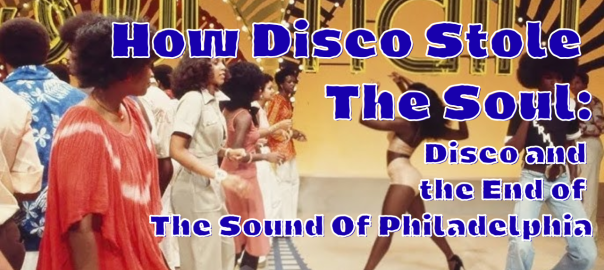
How Disco Stole The Soul: Disco and the End of The Sound Of Philadelphia

There was a time when The Sound of Philadelphia ruled the airwaves with elegance; a lush soul symphony where they wore their hearts on their sleeves and in the span of one four-minute song you could go from heartbreak to hope.

They called it TSOP, the brainchild of Kenneth Gamble and Leon Huff. It was a hit factory that rivaled Detroit and Memphis. A hit factory that was a cathedral built on the tightest rhythm sections and elegant string charts. It preached the gospel of love. Love Train was a sermon. If You Don’t Know Me By Now was dressing up in your Sunday finest for emotional devastation. Their de facto theme song TSOP (The Sound of Philadelphia) offered salvation and was the blueprint for sleek instrumental glide. Philly soul was a complete package, it had something to say.

Everything was good, and Philadelphia International Records was racking up the hits, but things were quickly changing. DJs in nightclubs wanted longer grooves and started looping certain songs to keep the dance floor packed. These songs were all the same, beat forward, the kind that became the backbone for disco.

The door had been cracked opened and disco crashed the house party: the furniture got rearranged, the lights were turned up, and the band was replaced with an endless, uninterrupted beat.

Disco first showed up like the guy someone knew. Everyone said he was cool. Turns out he was the guy who was yelling “The party is just starting” at three in the morning when everyone else had gone home. All of a sudden Do It Any Way You Wanna was being looped by a DJ and the song was now serving the groove instead of vice versa.

The church had been infiltrated and corrupted by disco. There was no going back.

There is one rule in disco, keep the bodies moving. Emotional depth had no place in a cocaine fueled delirium. The message became optional and any depth was cool if you fit in with the pulse, the four-on-the-floor that flies forward with no detours allowed.

Disco had conquered the dance floor, the music had flattened, slowly at first with the stories fading into slogans. Then the transformation quickened as white people discovered disco through movies like Saturday Night Fever and groups like The Bee Gees. The people in charge over at the record companies had their blinders removed and disco became big business. The Bee Gees became the face of the genre, making disco a generic universal vibe that had grandma dancing in the kitchen with the pre-teen kids. Every song on the radio had a mirror ball makeover in the late seventies.

The vocals too, they ended up riding the groove from the backseat, barely looking at the road. In Philly you had voices like Teddy Pendergrass who could break you down in real time, the notes pouring out like a confession from the depth of your soul. With Disco it was an endless chorus that was there to echo the beat.

The record companies loved it. They always love a formula. It was efficient, predictable, a groove that never changed. It is the kind of thing you could build a bank on. The songs got longer, slicker, and interchangeable. There was no band anymore, just a DJ, and they needed continuity and an endless stream of hits.

No more messy, human emotion driving songs. That was the domain of TSOP and Philadelphia International Records. Disco didn’t breathe or hesitate or get into a slow burn, those hallmarks were now a liability to profitability.

As with anything that is co-opted by mainstream culture and can be exploited by the suits running the record labels and radio stations, disco crashed. It burned bright, but burned fast. Remember Disco Demolition Nights? That was backlash coming quick and cancelling a whole glittery jacked-up culture.

Part of the wreckage was The Sound Of Philadelphia and the idea music could be a hit and be sophisticated and deeply felt all at once. The orchestra had packed up and left by the back door. TSOP wasn’t coming back either.

Disco has been rehabilitated through the warm lens of nostalgia, forgetting that in its short life it killed the Sound Of Philadelphia. A death that was far from merciful; more like 4 shots in the stomach and being left on the side of the road. It was seductive at first, then slowly the rhythm was turned into a beat that was so loud you couldn’t hear the heart underneath.

Disco celebrated specticle. TSOP testified; about love, about struggle, about community. Then it got steamrolled into a smooth, shiny, easy to sell piece of gold.

Tedeschi Trucks Band March 18th 2026 Review and Recap

There are bands that play songs, and then there are bands that play time. It is stretched, bent, allowed to breathe until a four minute song becomes a whole emotional weather system. A band like Tedeschi Trucks Band, whose shows are like walking into a Southern soul revival where the sermon comes down in distorted guitars, screaming brass, and gritty vocals.

Last night at the Beacon in NYC, midway through their 10 show residency, this was on full display. From the opening tune Hear My Dear thru to the Space Captain encore, Derek Trucks played slide so liquid it seemed to be melting the frets. He plays like other people breathe, with an unconscious inevitability, like there is no difference between the instrument and the hands holding it.

Standing next to Derek is his partner and the true gravitational center of the band, Susan Tedeschi. When she steps up to the mic the room shifts, warming and welcoming you. She sings in that rare liminal space between gospel confession and beer soaked barroom blues, a rare combination of tenderness and grit. Even the covers feel like she owns them, they become her joys and heartbreaks.

Susan is complimented by Mike Mattison, who took the lead several times during the night including a down and dirty take on Dylan’s Down In The Flood, and keyboard wizard Gabe Dixon whose vocals add an angelic feel. And they are just two of this musical juggernaut.

Tedeschi Trucks band are different from most jam adjacent acts, both in the professionalism and huge sound with the dozen musicians on stage. Horns, back ground singers, and dual drummers, the band becomes a soul soaked mini orchestra under the influence of the Allman Brothers Band.

The night’s set list was a strong mix of covers, originals, and new tunes. Hero, with their producer Mike Dandelion on bass, was the strongest of the new material. It’s “I’m not your hero / I’m not a zero” chorus hits hard and Susan brings it home with her vocal performance.

The horns added punch comes on like the ghost of Stax records. Blind Faith’s Had To Cry Today took on a whole new life. The rhythm section churning in a patient groove, letting the moment swell and build, right before it all locks in and there is a collective exhale.

Nels Cline came out toward the end of the recently added Loving Cup and stayed through Sleepy John Estes’ Leaving Trunk and Rahsaan Roland Kirk’s Volunteered Slavery. It became an extended blues work out stretching twenty minutes. Trucks and Cline traded solos, moving deftly from quiet to a spiral of sound that sounded as if it was defying gravity, while the band raged behind them.

That is where the magic lies, whether taking disparate covers and making them feel brand new or their ever expanding catalog of originals, they take the entire history of American music and make it alive.

The band closed with Matthew Moore’s Space Captain and we all swayed as one. It burned slow in our souls, the chorus of “Learning to live together” ringing in our ears as we spilled out into the cold night, warm for the brilliance we had been bathed in.

They may play Southern rock, blues and soul, but what they really do is play the moment those sounds collide. It reminds you why live music matters when a band like Tedeschi Trucks walk on stage and make life a little bit better.

Set list: Hear My Dear, Fall In, Little by Little, Last Night in the Rain, Until You Remember, Down in the Flood, Isaac/Kebbi Jam, Let Me Get By, Hero*, Tangled Up in Blue, Had to Cry Today, Soul Sweet Song, The Sky Is Crying, Looking for Answers, Loving Cup**> Leaving Trunk**> Volunteered Slavery** E: Space Captain (* With Mike Elizondo on bass) (** With Nels Cline on guitar)

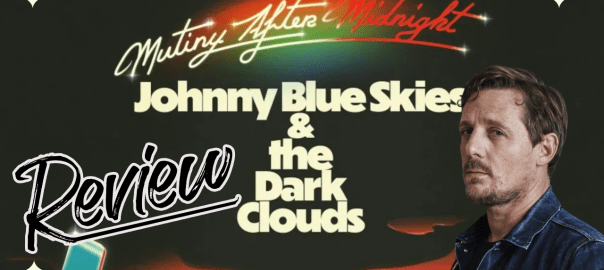
Review: Johnny Blue Skies Goes Rogue On Mutiny After Midnight

The artist formerly known as Sturgill Simpson has always been an outlaw, the kind who kicks open the bar door and asks why the jukebox keeps playing the same 6 songs. With Mutiny After Midnight, released under his alter ego Johnny Blue Skies, he’s taking it a step further and kicking the whole damn jukebox down the stairs.

Luckily we get to dance on the wreckage. Dance to a record that is a horny late night groove throw down. Equal parts outlaw country, disco, and psychedelic experiment, we find an LP full of bar-band verve when the clock is calling closing time. The music you put on when the lights are dim and the conversation turns strange.

With his backing band The Dark Clouds we get a class in old school rhythm. The songs move, and make you move, but not like the suits in Nashville would like it. It is loose, hypnotic, as much a jam session as a tightly constructed studio product. The guitars scintillate while stretching grooves, the keys swell and the drums and bass are locked in with the swagger you have on a Friday night when everyone gets paid and everyone wants to get laid.

The lyrics zig zag between frustration at the political landscape in America, keeping your dark side in check, and the half horny musings of a midnight philosopher. We find a broken America, full of bruised bodies begging for freedom, recounted with Sturgill’s wry humor and biting criticism. His sincerity is that irreverent shrug, it never feels preachy and that is the magic.

This is an artist who understands absurdity, he can take topics and phrasing that make the Music Row pundits cringe and turn them into an invitation to party. It is rugged charisma, provocative but playful, that has you chuckling as you’re cutting the linoleum carpet.

Critics may call out that the album feels unfinished. Those critics don’t understand that is why it works, why it breathes. It is trying to be alive, not perfect.

Johnny Blue Skies is going up against the machine, eschewing the trap of chasing algorithms and meticulous branding to make a dystopian disco protest joint. It is a greasy, naughty, sometimes deranged manifesto about sex, drugs, and what it really means to be an American.

Not the album America asked for, but maybe the one it needs.

The Day the Guitar Solo Died Or Why the ’90s Didn’t Kill Rock, They Just Made It Smaller

The guitar solo was once the pinnacle of rock excess, all sex and noise and youth.

You heard the opening riff of Van Halen’s Running With The Devil and it wasn’t just a song, it was a celebration of freedom. When AC/DC added cannons and a two ton Hell’s Bell to their stage show, it felt earned. Excess was the point. If Led Zeppelin wanted to sing about hobbits and Mordor before calling down the thunder gods, sign me up.

Seventies rock built monuments.
Eighties rock poured on gasoline and lit a match.

Then the ’90s showed up with a fire extinguisher and a thrift-store flannel.

If you asked Billy Corgan he would put forth the idea MTV betrayed rock. Or should I say the ‘myth’ that a room full of pencil pushers in New York woke up one day and said “Let’s kill rock and replace it with DJs and boy bands.”

I guess if you need a villain. I think it is a little more banal. MTV didn’t cancel rock, rock just stopped being so much fun.

The Main Character Syndrome

Rock was the universe in the ’70s with a gravitational pull that extended across the radio dial. Pink Floyd charted maps of the human psyche. Rush turned Romantic era poetry into rock anthems. You listened, but also had whole new world’s opened to you.

As America limped into the ’80s all subtlety was gone. Rock was at a crossroads between Punk and Disco. Blondie became huge, but weren’t sure what they were. Punk had gone underground and disco was dying, so rock did what it was supposed to and leaned in. We got Bon Jovi single handedly saving the hairspray industry, Def Leppard taking studio wizardry to heights previously only imagined for rock gods, and Metallica giving us theatrical precision wrapped in fury.

The look became cartoonish, the stage shows overblown spectacle where every song ended in an anthemic chorus, and every new release an event of epic proportion. Across the country teenagers tuned MTV into must see TV, for bands the video became identity. The single was cool on the radio, but seeing the video was what everyone would be talking about in school the next day.

MTV amplified rocks every crazy impulse.

Getting Smaller All The Time

And then there was flannel.

The ’80s looked right in the camera and screamed “I am the show,” the ’90s shifted it’s gaze and said “don’t look at me.” The over indulgent guitar solos had been replaced with the Doll’s mantra “Don’t bore us, get to the chorus.” And when you got to the chorus it wasn’t overblown, that would be dishonest. The big hair was gone, the studio clarity morphed into fuzz, and the ambition turned modest.

But it wasn’t an accident, it was a correction.

All the eyeliner and polytechnics in the world couldn’t make rock feel real again. Pearl Jam sang like their lives depended on it. Alice In Chains made you look at things you couldn’t unsee. Weezer took awkward and made it an art form.

And it worked.

But the why is what no one talks about, rock got smaller.

Gone were the 10 minute opuses. Solos became compact, but fierce. Rock shows filled with lights and props were casually throw into a backroom. It was as if rock had developed an intolerance of the excess that was it’s superpower.

The Bigger The Better

You can say that MTV pivoted here because it hated what rock had become, but it it is probably something simpler; rock stopped being a spectacle.

Having hour on hour of what amounted to anti-performance videos made it hard to keep viewers engaged. It is an uphill battle to sell attitude when it rejects attention. MTV had a void to fill, enter hip-hop, pop, r&b, and reality TV. The Real World was more in line with the old rock ethic of shock, drama, and need.

What rock had become was a landscape of fiercely loyal camps. The Pumpkins with their faux grandeur. Soundgarden roaring as mono-culture was fragmenting. And then Radiohead flushing the whole idea of a rock formula down the cultural throne.

That wasn’t MTV decentralizing rock, it was rock cannibalizing itself.

The Reactionary Generation

The ’90s was what it wasn’t.

Not glossy or flashy or virtuosic for the sake of virtuosity.

The problem is that the veracity of their movement wasn’t designed to build empires. It instead stood amongst the rubble, took a deep breath, and reset to rocks real roots.

The ’70s drew the blueprint.
The ’80s built the mansion.
The ’90s hung a sign on the door that read “Please remove your shoes.”

For some that was shrinkage, for other salvation.

That is the painful truth; the ’90s made rock less dominant, not worse.

It wasn’t unified. The theatrics were gone, so was the myth. Rock was no longer the loudest thing and MTV was built on loud. The guitar solo didn’t really die, it just was relegated to the back burner.

What is unpolished to one person is anti-corporate rock to another, but if your version of rock was built on the epic anthem and a solo that was like edging, the ’90s can seem tame.

And rock was never meant to be tame.

The Best Band You Never Heard Of: TWEN

TWEN is what your favorite band wants to be, a band that never blinks. Their songs arrive the way a great bar story does; midway through, a little drunk, and emotionally over committed, but somehow ending with everyone singing along whether they meant to or not. It is the sound of a conversation that started yesterday and will continue tomorrow. They understand what a lot of bands seem to forget, rock and roll isn’t supposed to be impressed with itself.

Jane Fitzsimmons’ voice moves effortlessly from intimate to electrifying, pulling you between vulnerability and defiance. Her lyrics respect the listener, there is no myth making or redemption arc. You know she isn’t going to bullshit you, just lucidity, tension, affinity, and forward motion. Sweetness isn’t a default so much as a risk she keeps taking. Guitarist Ian Jones is the perfect foil, complementing her lyrics while challenging the listener. He is grounding while pushing the songs to reckless abandon; an anchor and an accelerant. The songs feel lived in, there isn’t any cosplay here or posturing as outsiders.

While the songs themselves are quietly devastating, the way they are realized by the full band takes them next level. There are no neat resolutions here, no anthems either. What we find is a map of the aftermath, when you have already said it all and are just stuck with the memory of saying it. These songs build and then linger, haunting, staring back this is real.

There’s a strong sense that TWEN is comfortable in their skin. They survived every scene without belonging to any of them. Shoegaze wanted them hazier. Indie wanted them smarter. Punk wanted them punker. They said “No thanks,” instead crafting something unique from the disparate parts. That’s not irony. That’s clarity.

Live, TWEN taps into the idea of rock music as a shared nervous system, humming between stage and crowd. There is a loose intensity, a trusting in the moment, as tempos shift and songs bleed into one another. They treat rock and roll like a job. They show up, sweat, maybe bleed a little, collect their drink tickets, and do it again tomorrow.

Rock and roll dies when it becomes a therapy session and we live in a world where a lot of modern indie rock feels obsessed with catharsis. TWEN offers companionship, avoiding sentimentality by facing consequence. What happens after you say the thing. After you stay. After you leave. After you realize you’re still thinking about it months later while walking home from work.

These songs don’t fix your feelings. They sit with them. They light a cigarette then ask one good question and let the silence answer.

That is maybe the most rock and roll move left.

Phish and Trips: How British Psych and Prog Influenced Phish

Phish are often framed by their relationship to American Psychedelic music, particularly The Grateful Dead. There are some similarities in their efforts to create a community through music, but musically they are often miles apart. 

A song like Phish’s Simple is different lyrically and musically from The Dead’s Playing In The Band, but they are both rooted in a psychedelic aesthetic. Listening to both will make you realize it is hard to nail down what psychedelic music is.

Some interesting questions present themselves:

Is psychedelic music the blues and jazz based improvisations of The Grateful Dead? Is it the carefully constructed studio work of Pink Floyd?

Taking it a step further, can psychedelic music be seen as a unifying aesthetic? Is it rooted in Tim Leary’s mantra of “turn on, tune in and drop out” or is it just an umbrella term for a diverse collection of bands and sounds?

In the end it depends on your point of reference. Fans of bands that came out of San Francisco in the late 60s will have a different take than someone who looks at Syd Barrett as their standard bearer. 

American Psych was rhythm and blues based with open-ended jams. The lyrics were rooted in folk and blues tropes or made political statements. British Psych embraced composed songs that left little room for improvisation. The lyrics concerned themselves with telling stories that were divorced from reality or recounting mundane activities.

This gives us two lines, music and lyrics, to follow as we explore if Phish falls more in the British or American camps. We will then weigh this against Phish in relation to the offspring of American and British Psych, Country Rock in America and Prog in England.

The Lyrics:

1969 found America in turmoil and The Jefferson Airplane were on the forefront of a cultural revolution. Their lyrics had turned from songs of love and peace to a call to arms and nowhere is this more clear than on the title cut to their Volunteers album

Look what’s happening out in the streets

Got a revolution

Meanwhile in England we have Kieth Emerson’s band, The Nice, releasing their 3rd album. The lyrics are cryptic, mining mythology and religion, as in Azrael Revisited, while highlighting Emerson’s keyboard prowess.

They ask me what grey thought has just clouded my eye

I told them that Azrael looked down on their decline

What grey thought, if any, crossed the landscape of your mind

I told them that Azrael looks down on you from behind”

Phish falls on the British side here. Songs like The Lizards, Fee and Esther are vignettes that embrace fantasy in their lyrics and complexity in their composition. There are very few political statements or calls to arms in Phish’s work.

Point British Psych

The Music:

1969 is also significant in how each camp executed the composition and performance of their songs. An open ended jam like Quicksilver Messenger Service’s take on Bo Diddley’s Who Do You Love? compared to King Crimson and their structured song In The Court Of The Crimson King (including The Return of the Fire Witch & The Dance of the Puppets) tells us a lot about where Phish falls.

Quicksilver was typical of the American Psych scene in 1969. They played a groove based jam style. Abandoning the basic structure of the song, like in jazz, the band improvises over that basic melody for 20+ minutes.

At the same time in England was Robert Fripp, Greg Lake and the rest of King Crimson’s first incarnation playing composed pieces whose lyrics recounted a hero’s journey, much like Phish and their Gamehendge saga. 

Phish is more akin to Crimson with their multi part thematic pieces like YEM and Fluffhead. We don’t see blues based boogie extravaganzas with Phish. They abandoned American Psych as a viable path two years into their career, focusing instead on compositions that challenged them as a band while also challenging the listener.

Point British Psych

As the 70s started we saw the movement of both American and British Psych away from their roots. In America the sound went back to basics and became Country Rock. England went the other way becoming Prog with its complex arrangements very similar to the aforementioned Fluffhead.

Phish did incorporate some American styles like bluegrass and straight rock-and-roll into their repertoire, but composed songs were the focus, at least through Billy Breathes. This is where we find a deep connection between Phish and British Psych. 

American Psych in its early days focused on glorifying the Summer Of Love. The Turtles Happy Together or Young Rascals Groovin’ were straightforward with their message of peace and love, but as the 60s ended things changed.

Rising from the ashes of Altamont the SF sound took a radical turn. The wild electric sound of the Summer Of Love was replaced with acoustic guitars and well crafted lyrics. Albums like The Grateful Dead’s Workingman’s Dead and The Byrds’ Sweetheart of The Radio let listeners know American Psych had grown up and made peace with itself.

British Psych’s focus is on telling stories and creating musical landscapes that recreate the psychedelic experience. A song like Procol Harum’s Whiter Shade Of Pale or Pink Floyd’s Bike transported the listener to another time and place. 

In the early 70s British Psych morphed into Prog. It was a logical extension as the songs became longer and the lyrics more metaphysical. We can see a direct line to Phish in songs like The Music Box by Genesis or Starship Trooper by Yes.

The use of classical motifs as in Starship Trooper is a defining characteristic from Prog’s earliest days. It is a thread that holds British Psych and Prog together. It is also something employed by Phish in their composed pieces.

Trey told Guitar World in 2013:

The sound of Bach’s music has always appealed to me.

The use of arpeggios in “You Enjoy Myself” is definitely influenced by Bach.

Procol Harum used Bach’s Air for the melody in Whiter Shade Of Pale and King Crimson embraced the modernism movement in classical music. Genesis then expanded on this idea with albums like Foxtrot and The Lamb Lies Down On Broadway. Trey has often talked about his love for both King Crimson and Peter Gabriel era Genesis, he even spoke at Genesis’ induction into the R&R HOF.

He explained further in a NY Times feature in 2019, noting how Phish was unlike the Dead, and by extension Am Psych:

At 14, 15, 16, I worshiped at the idol of Peter Gabriel — the first couple of Genesis albums and then his solo albums. He was like a god. Prog rock was our thing. Then, through Peter Gabriel and “The Lamb Lies Down on Broadway,” I was introduced to Brian Eno’s music, and I had the ’70s Eno albums on perma-loop. I didn’t get into the Grateful Dead until 1980, ’81. That was when my parents got divorced and I went to boarding school and people there liked the Dead. So we would go to shows. We took acid. It was great. But at the same time I was going to see Frank Zappa and Sun Ra. King Crimson’s “Larks’ Tongues in Aspic” was one of my favorite records. I also worshiped at the idol of early Talking Heads. So if you listen to the first couple of Phish albums, they don’t sound anything like the Grateful Dead. I was more interested in Yes

Which makes 3 for British Psych and 0 for American Psych. 

Throughout their career, Anastasio has continued this worshipping in songs like Guyute, Time Turns Elastic and Scents And Subtle Sounds. On the other side, they have also shown a deep reverence for British Psych in the covers they play, particularly Jon Fishman.

There was a time when most nights Fishman would take center stage with Trey on drums to serenade the crowd like only he can. Of the many songs he has attempted, he has covered more Pink Floyd / Syd Barrett songs than any other artist in his repertoire. No Good Trying, Bike, Terrapin, Baby Lemonade and Love You have all gotten the vacuum treatment.

They are fun and perhaps give us a clue where Fishman takes his inspiration from when writing lyrics. Songs like Gumbo and Tube take more from the unique British sense of lyricism in Barrett’s songs than from anything Robert Hunter wrote. They are surreal looks into a strange world, reminiscent of a modern day wonderland with all its pitfalls and dangers. 

As we touched on, British Psych is recreating the psychedelic experience through music, while Am Psych exists to enhance the psychedelic experience through music. The distinction between where fans of a band like The Grateful Dead’s and Phish falls is here. Mike has commented on this:

There’s definitely some crossover (between Phish and Grateful Dead fans) —we both appeal to somewhat of a hippie-ish audience, and we both jam a lot, and this and that— but the people who really like the Dead probably don’t like us. Because the music is different enough, and the rhythms are different, and the attitude and even the sense of humor is way different.

An almost British sense of humor and approach to songwriting that has served Phish well. It’s true that Phish does not write many multipart compositions anymore, but we can still hear Psych and Prog influences in a song like Petrichor on Big Boat. Sounding almost like a lost Gabriel era Genesis composition, it is adventurous but comfortable, a testament to the British Psych and Prog that influenced Phish on so many levels