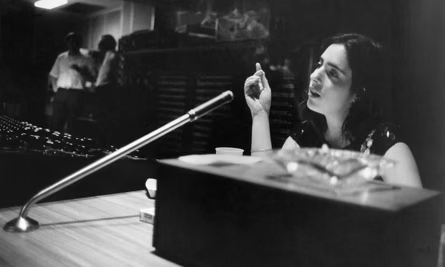
Some people sing your soul, hitting the deepest parts of you; they give you a safe place to be vulnerable. Unexpalinable without a deep listen, Laura Nyro isn’t a playlist recommendation, she is a catalyst for spiritual awakening.
You know her songs. “Stoned Soul Picnic,” “Wedding Bell Blues,” and “Sweet Blindness” became gold for the 5th Dimension. Blood, Sweat & Tears turned “And When I Die” into brass soaked timelessness. Three Dog Night taught us to hide our hearts in “Eli’s Comin’” like our lives depend on it.
But knowing the hits is only half the story.
Her own recordings eschew the pop trappings of Barbra Streisand and Linda Ronstadt’s interpretations leaving us with something rawer, truer. Choruses thunder in striking at the deepest part of you, tempos are fluid morphing mid thought, and melodies rise and fall like the tide. It is intimate, coming in flashes of calm and panic.
The streets were filled with revolution in the late sixties and rock took itself seriously, anthemic choruses and loud guitars were the order of the day. Nyro went the other way, her revolution was internal and not fueled by rocks more base instincts.
Instead she took a little from the Brill Building, gospel rapture from the Baptist church, Broadway’s penchant for drama, the sweet doo-wop from the street corners, and layered her street smart lyrics over top like steam lingering on summer asphalt. Melodrama became holy. Vulnerability became a badge of honor.
She wrote her first hit at seventeen and by the time Eli And The Thirteenth Confession came out she was already a master of pure pop goodness, invitation and incantation at once. Close your eyes as her voice goes from alluring to despair in a breath on Poverty Train. Let the title track’s chorus roll over you as she joyously shouts devotion and defiance.
It can be a shock to the system going from a whisper to a scream, following her instincts in the dark glory on New York Tendaberry. The edges weren’t smooth and that was revolutionary in an era of pop waifs and folk goddesses. This was sensual, operatic, and then abruptly funny or ferocious. The opening strains of You Don’t Love Me When I Cry sneak up you, asking you to lean in closer before knocking you back through a wall. This was a demand, to be felt, not just heard.
The list of artists who fall under her influence includes names like Elton John, Joni Mitchell, Rickie Lee Jones. Even artists who you may think sound nothing like her owe her a debt. The emotional maximalism, the touch of jazz phrasing, the narrative bravado made the pop structure stretch, morph, and land like a gut punch.
At one point she decided to stay home and just be mom, stepping back from the grind with stubborn integrity. She would come back from time to time, Smile in the mid seventies, and in the late eighties when she toured regularly and released new music. The passions may have changed, the songs found an earthier feel, but the intensity never waiver. It was almost as if she had found the peace she was seeking as a young songwriter.
1997 saw Laura leave the planet. Too young. Fuck cancer. But has she really left us? She lives in all the artists who worshiped at her alter, seeing that pop music was more than product. It was a reckoning of trembling piano and a chorus shouted from the roof tops, walking the line between restraint and abandon.
As much as the sixties were about rebellion, they may have been more about possibility. A chorus outside the rules, she heard the future and brought it into the now. She gave us hits, but also permission, when you felt too much, were too much, to look at the dark.
That is what rock and roll always wants to be.
 Inertia Satori