Tag Archives: classic-rock

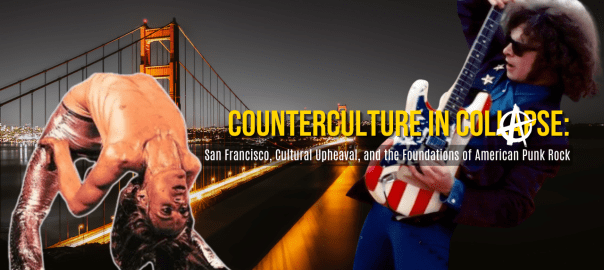
Counterculture in Collapse: FM Radio, Cultural Upheaval, and the Foundations of Punk Rock

The alienation and social unrest found in the three chord hopped up music called Punk didn’t just appear in New York in the mid seventies. Long before CBGB’s became the epicenter for a new music there were bands pushing back against the corporatization of Rock and Roll. The polished, radio friendly sounds of bands like The Beach Boys, Beatles, Elvis and Motown had become passé while songs like “Louie Louie” by The Kingsman were pushing boundaries. The barely intelligible “Louie Louie” was actually considered subversive with the FBI investigating Richard Berry in February 1964 over complaints the lyrics were obscene. Nothing came of it, but the point was made; rock and roll was dangerous.

These new sounds were played fast and loud for a disenfranchised youth audience, fueling the dreams of hundreds of kids in high school rock bands pounding away on 2nd hand guitars. If you knew 3 chords and could play for 2 and a half minutes you could do this rock and roll thing. Groups like The Monks “I Hate You,” The Count Five “Psychotic Reaction” and The Sonics “Psycho” stripped back all the gloss and pomp. It was attitude over virtuosity. Teen angst unrestrained and amplified through a blown speaker. They were playing by their own set of rules.

You can say it started in 1955 when a new sound came across American radio. Sonny Burgess “Red Headed Woman,” Billy Lee Riley “Flying Saucers Rock and Roll,” Carl Perkins’ “Blue Suede Shoes” and of course Jerry Lee Lewis “Great Balls Of Fire” were all attitude and wild showmanship. They were pushing boundaries with their shows, lyrics and primal beat. In 1958 Link Wray upped the game, releasing “Rumble,” a down and dirty instrumental that Iggy Pop said inspired him to join a band. From this even rawer sounds like Sam the Sham and the Pharaohs “Wooly Bully”, The Kingsman’s “Louie Louie” and The Trashmen’s “Surfin’ Bird” entered the mainstream consciousness, further pushing the idea of what rock and roll was.

It was even happening in the heart of Motown where Wayne Kramer and Fred “Sonic” Smith together with Rob Tyner, Michael Davis and Dennis Thompson started what would become the first cornerstone of Punk Rock’s foundation, The MC5. It was 1964 and the folkie movement had gained steam with the likes of Bob Dylan and Phil Oakes making protest music with acoustic instruments. It was there that the idea that you could protest with electric instruments just as easily was planted and over the next few years the band got tighter, began writing songs and by the late 60s were waiting for a chance to be released on the world.

American popular culture in 1967 took a 180 with what was known as the Summer of Love. A media construct to try and explain what was happening socially, musically and culturally in SF. Bands played long free form shows at various reclaimed ballrooms around the city and a reevaluation of what could and couldn’t be done within the context of a rock and roll show started. Sex and drugs were no longer seen as taboo and a new way of thinking was born. Sadly, the Utopia that was being sold didn’t last long and by 1968 the whole thing had become a shitshow.

A big factor in the decline of the SF scene was the rise of FM radio. KSAN in San Francisco had become a model for the wild west that was FM radio, playing deep album cuts, unknown bands and live performances, but what started as a means to share new sounds and a new philosophy to a larger audience was co-opted in 1968 by big media conglomerates to sell records. FM stations began to pop in small town America and bands like the Jefferson Airplane and Quicksilver Messenger Service, whose long jams were favored on these formats, became stars. There was also an unintended consequence, it opened people’s minds and the kids began flocking to San Francisco to take part in free love, music and drugs. The problem was this perceived ‘unlimited freedom’ led down some dark roads and the Summer of love was over as quickly as it began in a haze of bad drugs and broken dreams. As FM became co-opted by the industry, a new underground energy sought to reclaim rock for the disaffected, paving the way for punk’s DIY ethos.

At the same time anger over the Vietnam war had begun to stoke serious upheaval in middle American. Children were pitted against parents and friends against neighbors, the Tet Offensive showed America losing a war they shouldn’t have been in, RFK and MLK were assassinated and the Democratic National Convention fell into chaos with cops beating kids in the streets. The call to peace and love began to fall on deaf ears with the daily assault of images of the war on television and the time was right for the MC 5. They became the soundtrack for the violence the country witnessed at the 1968 Democratic Convention and had found their voice.

By 1969 the SF scene had completely collapsed with the Hell’s Angels killing a concert goer at Altamont Speedway while The Rolling Stones played Sympathy For The Devil. Out of the ashes came the MC5’s seminal release Kick Out The Jams and they provided a much needed foil in American music to the sounds on the radio that had grown from a counterculture movement to a pop cliche. Recorded live at Detroit’s Grande Ballroom on October 30 and 31, 1968, it preached something radically different, embracing their militant activism of their manager, the poet, John Sinclair. They were throwing a different kind of Party.

The music they played was similar in some ways to the SF sound in as much as it was loose and favored longer solos, but it was differentiated by the intense edge of the songs, raw and unpolished, overtly political and not shying away from inciting violence. Because they were, in the end, a reaction against and the next logical step to the SF counterculture. Sadly, they didn’t find a mass market and even after getting a big feature in Rolling Stone, never were more than an underground band. By 1972 were done. Their influence continues to this day, but at the time it left the underground with a void waiting to be filled.

Flower power had become a tourist trap, a glittering corpse of failed idealism, and bands like the MC5 appeared to fill the void. Slick production and love and light lyrics gave way to music that could punch you in the gut; three chords and maximum noise with lyrics rooted in a spit in the face of authority manifesto fueled by casual nihilism.

From the smoke filled basements in Detroit the sound of kids who were sick of the charade called FM radio with it’s sixties idealism appeared. It answered the call for unpolished, raw, uncut music. It wasn’t polite. It wasn’t pretty. It was a musical middle finger to a society that had failed the youth with the promise of freedom and instead delivering disappointment. They answered with a revolution made up of amps, sneakers, and sneers.
The Records Keep Talking: Joe McDonald Remembered

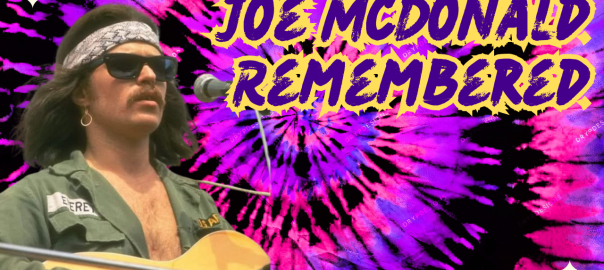
There are voices that live in another time and place for me, faint voices that let you step into the past. You can pull them up on You Tube, but the intimacy of sitting in a bedroom, black light melting the lamp shade, is gone. Country Joe McDonald, with The Fish, or solo, was one of those voices for me. Always whispering. Now all that remains are those artifacts, the well worn vinyl.

I knew him from watching Woodstock. The iconic “FUCK” cheer was enough to hook me at 13. Then there was Rock and Soul Music and I was off to the record store.

In those days finding records was a sport and an art. You had to get to some pretty weird spots to find the best selections. Most of the Country Joe albums I had were bought on one trip to Florida.

Like most rock and roll kids, part of the obsession was flipping through rows of records. Weighing the cover, any previous knowledge of the band. Reading any notes to figure out the musicians. Hoping to find something dangerous or mysterious, something to make you feel alive.

Remember, you were spending your allowance, you had to be strategic. Today you can hear anything on a whim, back then you spent that money you were invested.

It was the summer before eighth grade and I was under the influence of the Summer Of Love. Country Joe fit nicely in that box. After a while you realize how much a part of the story of the sixties he was. This was on the ground reporting from a tumultuous time in America.

It was the happenstance appearance at Woodstock, getting everyone to chant an obscenity, that launched him into the counter culture subconscious. It was a finger to the war in Vietnam and made you believe music could change the world, an idea that ran deep through his catalog.

Here We Go Again may be my favorite album of his with The Fish. It leans early into the move from straight psychedelic to the country influence the scene morphed into in the early seventies. You can hear the road worn longing just below the warm friendly hug of the lilting opening track.

This is the sound of someone who has spent lifetime toiling at their art. It is lived in, honest, OK with the chaos. It is putting forth the belief that we need to believe in music. You come back because it is real, there is no fancy ending or neat resolution in Donovan’s Reef or Crystal Blues.

Still it was an odd solo album, War War War, that really was it for me. It spoke to my naive sensibilities. I was just discovering the power of poetry and McDonald’s brilliant re-purposing of Robert Service’s poems anout World War One couldn’t have dovetailed for me more perfectly. It was the rawness, I closed my eyes and could see Joe in a tattered uniform relating Service’s brilliant accounting of war.

It is the weight of two eras and my own personal battles suspended in a perfect liminal space. It covers the spcetrum of human emotion, a lot of anger, but humor too, and sadness, and even an optimistic hope. It was prologue and prelude.

Storytelling, laid bare with voice and guitar, is a difficult endeavor. McDonald did it with wide eyed grace, showing you the horror while keeping you grounded in the present. Right there, spinning on my turntable, he was instilling in me the need for peace.

His voice draws you in. It is unpretentious, he has seen the absurdity and sang out in defiance. Earthy, witty, wry, it was as much protest and cosmic joke, a spirit from another time whose echoes reverberate. When protest music works it nudges you toward the realization that this is the voice of the everyday people, not because it shouts.

That was Joe McDonald. A voice I will carry with me in memories of worn vinyl. Rest easy, your songs will march on.

9 Magic Moments from The Clifford Ball

Look at those cavemen, it’s the freakiest show.

I hadn’t planned on going to the Clifford Ball. After Jerry died and Phish got bigger and bigger I shied away from them.I hit Deer Creek and drove back to Baltimore after the show. My friend Rick had an extra for Hershey Park and asked if I was in.The December show there the Winter before was one of my favorite times seeing Phish, so I decided to go.

I went to his house to get the ticket, and the guy selling it was someone I knew from 9th grade. I bought the ticket, and he offered me a ride, but he was going to The Clifford Ball afterward, so…. I didn’t have an actual job at that point, so I asked, “Can I get a ticket.” He said, “Well, actually, I have an extra,” and that was it. I packed a few shirts and shorts, took my last $100, and hit the road the next morning.

The drive up to Hershey was all talk about ‘maybe they’ll get 20,000 people, and Puff Head, and I were catching up on eight years since 9th grade. The drive to Plattsburg was all talk about, ‘they will hit 50,000 easy.’ There was palpable electricity in the air at Hershey, and within 24 hours of the show, we all descended on Plattsburgh Air Force Base.

The scope of what Phish was about to pull off wasn’t even fathomable as we drove in. I figured I’d find some hottie to groove with for the weekend, get psychedelic and let the outside world go.

After setting up camp, we were treated to a soundcheck jam that had the first reference to Mr. Sausage besides some great improvisation for over an hour. We fired up the grill, cracked some beers, got irie, and heard sweet sounds drifting out of the not-far distance.

And that was the first glimpse of the magic that would take place that weekend. Mr. Sausage would soon become the stuff of legends, and Plattsburg would never be the same.

The next day, when the festival officially started, we were given a plethora of moments that would shape and inform Phish, festivals, and jam culture going forward Here are 8 more of those magic moments:

Split Open Night 01 Set II

As night fell and set II opened, the band made a statement that the Ball would be like nothing we had ever seen

Acoustic mini set Night 01 Set II

As close as we got (until Fest 8) to a full band acoustic Phish. Short but sweet.

Hood Jam Night 01 Set III

The fireworks during the jam were something to behold

Mike’s> Simple> Contact> Weekapaug Night 01 Set II

A plethora of a Mike’s Groove.

Flatbed Jam Overnight between shows

The original 4th set.

Reba Night 02 Set I

Unique with a slow almost zeppelin no quarter jam by page

Brother with Ben and Jerry Night 02 Set II

The kind of guest vocalist you want.

Run Like An Antelope Night 02 Set II

Incorporated a female acrobat (Sylvia from Rio de Janeiro) on a rope suspended circus-style high above the stage.

“The list could go on and on, but we will leave it here. About 9 am Monday morning, Pat woke me up and said, let’s beat the traffic out. The ride home was more silent, all of us lost in the memory of what we had taken part in. Phish was community now, we were many, and within a year, Phish would be poised to destroy America.”